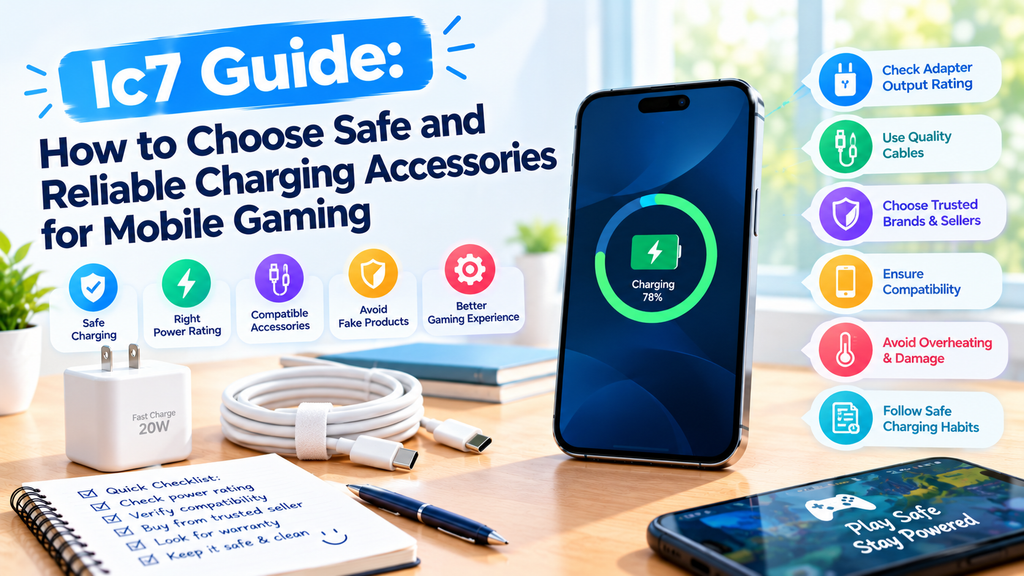
A mobile phone needs a steady power supply to work properly. The charging cable and adapter play an important role in delivering that power. Using poor-quality accessories can lead to slow charging, overheating, loose connections, or damage to the charging port.
For people who use mobile apps regularly, including the iv7 game, reliable charging accessories can make daily phone use more convenient. However, choosing a charger should not be based only on price or appearance. Power ratings, build quality, compatibility, and safety standards all deserve attention.
This guide explains how to select suitable charging accessories and avoid common mistakes.
Why Charging Accessories Deserve Attention
A charger may look simple, but its components affect how safely electricity reaches your phone. A low-quality adapter may not regulate power correctly, while a weak cable can create an unstable connection.
Good charging accessories can help you:
- Maintain a stable charging connection.
- Reduce unnecessary charging interruptions.
- Avoid cables that become loose or damaged quickly.
- Protect the phone from avoidable electrical risks.
- Make charging more convenient at home or while traveling.
A reliable charger cannot guarantee that a phone will never develop a battery problem. Still, using suitable accessories removes one common source of risk.
Understand the Difference Between a Cable and an Adapter
The charging cable and wall adapter perform different jobs. Both must be suitable for your device.
What Does a Charging Adapter Do?
The adapter connects to the electrical outlet and supplies power to the phone through the cable. Its output rating is usually printed on its body.
Check these details before purchasing:
- Output voltage: Shows the voltage supplied by the adapter.
- Output current: Indicates how much current it can provide.
- Power rating: Usually measured in watts.
- Charging standards: Some phones support specific fast-charging technologies.
For example, a charger rated at 20 watts does not mean every phone will charge at 20 watts. The phone must support the required charging standard.
Why Does Cable Quality Matter?
A cable carries power from the adapter to the phone. A poorly made cable may have weak connectors, damaged insulation, or an unreliable internal connection.
Check the following:
- Strong connectors that fit properly.
- Flexible outer material without exposed wires.
- Suitable power capacity for the adapter.
- Correct connector type for your phone.
- Clear product information from the manufacturer.
Avoid cables that feel unusually light, have uneven connectors, or show signs of poor construction.
Check Charging Compatibility Before Buying
Not every charger works at the same speed with every phone. A high-wattage adapter may still charge a device slowly if the phone does not support its charging technology.
Before buying a new accessory, check your phone’s official specifications.
Match the Supported Charging Standard
Some devices support USB Power Delivery, while others may use different charging systems. The adapter and phone need compatible standards to achieve their supported charging speeds.
A suitable cable is also important. If the cable cannot handle the required power, the phone may charge more slowly.
Do Not Assume More Watts Are Always Better
A higher power rating is not automatically the best choice. Your phone controls the amount of power it accepts, based on its supported charging system.
For everyday use, choose an adapter that meets the manufacturer’s recommendations instead of purchasing the highest-rated option available.
Recognize Warning Signs of Low-Quality Chargers
Cheap charging accessories can become expensive if they cause damage or need frequent replacement.
Pay attention to these warning signs:
- Unusual buzzing or crackling sounds.
- A burning smell during charging.
- Excessive heat from the adapter or cable.
- Loose connections that interrupt charging.
- Discolored plastic or damaged insulation.
- Unclear product labels and missing specifications.
Stop using an accessory if you notice these problems. Disconnect it safely and replace it with a suitable product.
A charger becoming slightly warm during normal use is not always a problem. However, excessive heat, strange smells, or visible damage should never be ignored.
Choose Accessories From Trustworthy Sellers
The seller matters almost as much as the product itself. Online marketplaces may contain accessories with misleading descriptions or copied brand names.
Use these checks before placing an order:
Examine the Product Details
A reliable listing should clearly mention the manufacturer, model, supported power output, connector type, and relevant safety information.
Be careful with listings that make large performance claims but provide no technical details.
Check the Manufacturer and Warranty
Buy from the phone manufacturer or a reputable accessory brand when possible. Review the warranty terms and return policy before paying.
A very low price does not automatically mean a product is unsafe, but an unusually cheap charger claiming premium specifications deserves extra attention.
Avoid Counterfeit Branding
Fake accessories may copy the packaging and appearance of established brands. Check the seller, product model, packaging details, and official verification options where available.
Do not rely on logos alone to confirm authenticity.
Simple Charging Habits That Help Protect Your Phone
Even a good charger should be used correctly. Small daily habits can reduce avoidable problems.
- Place the adapter in a dry, open area.
- Keep the cable away from sharp edges and heavy objects.
- Remove the cable by holding its connector, not pulling the wire.
- Avoid bending the cable sharply near either connector.
- Keep charging ports free from dust and moisture.
- Do not cover an adapter with blankets or other materials.
- Replace accessories that show visible damage.
If the phone or charger becomes unusually hot, disconnect the power supply when safe and allow the equipment to cool.
Using Your Phone While It Charges
Many people use their phones while connected to a charger. Reading messages or performing light tasks may not create a problem with suitable equipment. However, demanding activities can increase heat.
For example, playing the iv7 game while charging may add to the phone’s workload, depending on the app and device.
Consider these practical steps:
- Avoid intensive use if the phone becomes hot.
- Keep the device on a hard, ventilated surface.
- Do not place the phone under pillows or blankets.
- Use a compatible adapter and cable.
- Take a break if the device shows a temperature warning.
The goal is not to avoid using the phone completely. It is to prevent unnecessary heat and respond to warning signs.
A Quick Checklist Before Buying a Charger
Use this checklist to compare charging accessories before making a purchase.
- Confirm the adapter’s output rating.
- Check compatibility with your phone.
- Verify that the cable supports the required power.
- Review the manufacturer’s information.
- Inspect the connector type and build quality.
- Check warranty and return conditions.
- Avoid products with unclear specifications.
- Purchase from a trustworthy seller.
These checks are useful when replacing an old charger or buying an additional one for travel.
Final Thoughts
Charging accessories are small purchases, but they affect an important part of everyday phone use. A suitable adapter, a well-made cable, and sensible charging habits can help reduce common problems.
Before spending money, compare the technical specifications with your phone’s requirements. Do not choose a charger only because it promises the highest speed or has the lowest price.
Whether you use iv7, other mobile apps, or your phone for everyday tasks, safe charging should remain a basic part of device care. A reliable setup starts with compatible equipment and continues with careful use.
Frequently Asked Questions
1. Can I use any USB charger with my phone?
Not every USB charger provides the same charging standard or power output. Check your phone’s specifications and choose a compatible adapter.
2. Does a higher-wattage charger damage a phone?
A compatible charger does not automatically damage a phone because it has a higher maximum wattage. The device controls the power it accepts. However, always use a reputable adapter that follows suitable safety standards.
3. How can I tell if a charging cable is unsafe?
Look for exposed wires, damaged insulation, loose connectors, unusual heat, or repeated charging interruptions. Stop using a cable that shows these signs.
4. Why does my phone charge slowly with a new adapter?
The adapter may use an unsupported charging standard, or the cable may not support the required power. Background activity, battery temperature, and phone settings can also affect charging speed.
5. Is it safe to use my phone while charging?
Light use is generally possible with compatible equipment. However, demanding activities can increase heat. Stop using the phone if it becomes unusually hot or displays a temperature warning.
6. Should I replace a charger that becomes hot?
Slight warmth can be normal during operation. Excessive heat, burning smells, buzzing sounds, or damaged parts are warning signs. Stop using the charger and replace it with a suitable product.
7. What should I check before buying an iv7 apk latest version?
Check that the download comes from a trustworthy source, confirm the file information, and review the permissions requested during installation. Do not install files from unknown pages simply because they advertise the iv7 apk latest version.