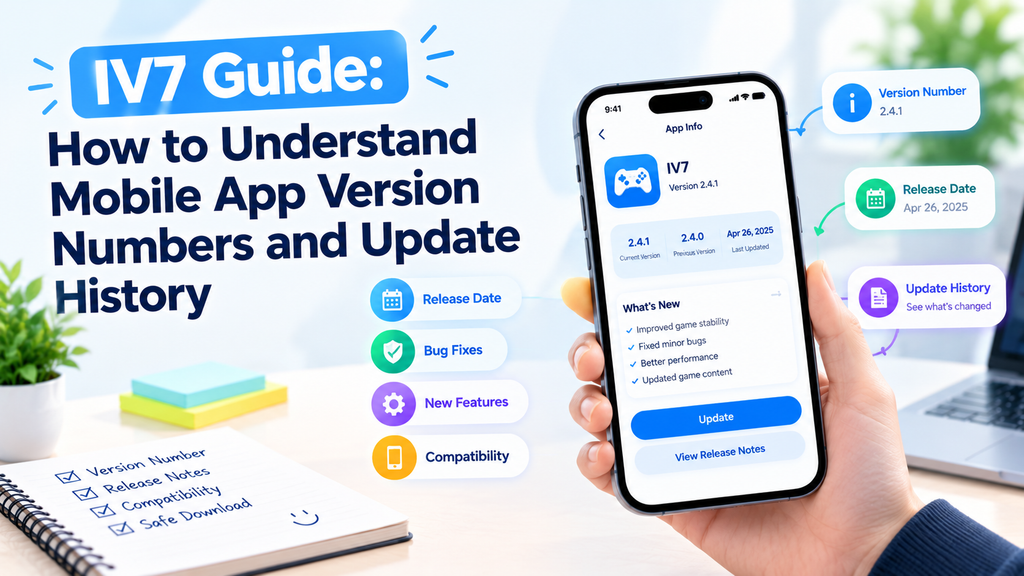
An application can receive several updates over time. Each release may include changes to its interface, compatibility, stability, or other parts of the software. However, a newer version number does not always explain what has changed or whether an update is suitable for a particular device.
Users of iv7, iv7 game, and other mobile applications can make better decisions by understanding version numbers and update history. These details help identify installed releases, compare available packages, and avoid confusion when several files have similar names.
Instead of choosing an update simply because it says “latest,” users should learn how to read the information behind each release.
What Does an App Version Number Mean?
A version number identifies a particular release of an application. Developers use these numbers to distinguish earlier builds from newer ones.
A version number may look like this:
2.4.1
It can contain several sections, and each section may represent a different level of change. The exact numbering system depends on the developer.
For example, some developers follow a common format:
- Major number: May indicate significant changes or a new release generation.
- Minor number: May represent added features or improvements.
- Patch number: May identify smaller corrections or fixes.
This format is widely used in software development, but it is not a universal rule. An application’s versioning system may follow a different structure.
How to Read Version Changes
Comparing two version numbers can help users understand how releases are organized.
Major Version Changes
A major version change may indicate a larger development step. It could involve a redesigned interface, significant internal changes, or updated compatibility requirements.
For example, a move from version 2.x to 3.x may represent a substantial release, but the number alone cannot confirm what changed.
Always check the release notes for actual details.
Minor Version Changes
A minor update may introduce additional functions, adjustments, or improvements without changing the main release number.
These changes can affect how an application looks or behaves. However, the exact purpose depends on the developer’s release information.
Patch Updates
Patch releases are often used for smaller corrections. They may address specific problems or improve existing behavior.
A small number change does not mean an update is unimportant. Even a limited correction may matter to users experiencing a particular issue.
Why Update History Is Worth Checking
Update history provides more context than a version number alone. It may show when releases were published and what the developer intended to change.
Useful release information can include:
- New functions or interface adjustments.
- Compatibility changes.
- Resolved technical problems.
- Performance improvements.
- Security-related corrections.
- Known limitations.
For people using iv7 game, this information can help explain why a newer release behaves differently from an older installation.
If release notes are unavailable, do not invent explanations based on the version number. The actual changes cannot be confirmed without reliable release information.
How to Compare Two App Releases
When several versions are available, compare their details instead of relying on file names or promotional descriptions.
Check the Full Version Number
Write down the version currently installed on your phone. Then compare it with the version listed by the source offering the update.
Avoid comparing only the first number or assuming that a longer number always means a newer release.
Review the Release Date
A release date can help distinguish older packages from more recent ones.
However, dates shown on unofficial download pages may not be accurate. Give preference to information provided by the developer or another reliable source.
Read the Change Description
Look for specific details rather than general statements such as “better experience” or “improved performance.”
Useful release notes explain what was changed. If the description is too vague, treat it as limited information rather than proof of an improvement.
Check Device Compatibility
A newer application build may require a different Android version or additional device resources.
Before installing iv7 apk latest version, confirm that the package is compatible with your phone. A newer release is not automatically suitable for every device.
Understand the Difference Between an App Version and an APK File
An APK is an Android installation package. It contains the files needed to install an application on a compatible Android device.
The installed application and the APK file are not the same thing.
For example:
- An APK file can remain in the Downloads folder after installation.
- The installed application has its own version information.
- Several APK files may contain different releases.
- Deleting an unused installation package does not normally remove the installed app.
This distinction is useful when managing iv7 apkz downloads. Keeping multiple packages without identifying them can create confusion about which release is installed.
How to Check the Installed Version on Android
You can usually find an application’s version information through its settings.
Use the Application Settings
Follow these general steps:
- Open your phone’s Settings.
- Select Apps or Applications.
- Find and open the relevant application.
- Look for its app information or version details.
- Note the displayed version number.
The exact menu layout depends on your Android version and phone manufacturer.
Some applications also display their version number in an About, Help, or Information section.
Compare It With the Available Release
Once you know the installed version, compare it with the information from the source providing the update.
Check the full number, release date, compatibility details, and developer information before proceeding.
Why You Should Not Trust Every “Latest Version” Label
The phrase “latest version” is commonly used on application download pages. However, the label alone does not prove that a file is current, official, or safe.
An unofficial website may use an outdated package while presenting it as the newest release.
Before downloading, check:
- Whether the source is officially associated with the developer.
- Whether the application name and package details match.
- Whether the release information is consistent.
- Whether the file comes from a trustworthy location.
- Whether the package requests unexpected access.
Do not disable Android security protections just to install a file from an uncertain source.
The same checks apply when a website advertises the iv7 game apk latest version. A version label is only one detail, not proof of authenticity.
Keep a Simple Update History for Your Device
Users who install applications through APK files may benefit from maintaining a small record of installed versions.
A basic note can include:
| Detail | Information to record |
| Application name | The installed app |
| Version number | Full displayed version |
| Installation date | Date installed |
| Download source | Where the package came from |
| Device compatibility | Android requirements, if known |
| Update notes | Main changes described by the developer |
This record can make troubleshooting easier if an application behaves differently after an update.
Avoid storing private account passwords or verification codes in the same note.
Final Thoughts
Version numbers and update history provide useful information about how an application develops over time. They help users distinguish releases, understand documented changes, and avoid installing packages based only on promotional labels.
People using iv7 game should check the full version number, review available release notes, and confirm device compatibility before updating. When using an APK package, the source matters just as much as the version displayed on the download page.
A careful update decision starts with reliable information, not the word “latest.”
Frequently Asked Questions
1. What is an app version number?
An app version number identifies a particular software release. It helps users and developers distinguish one build from another.
2. Does a higher version number always mean better performance?
No. A higher number indicates a different release, but it does not guarantee better performance on every device. Check the release notes and compatibility information.
3. What is the difference between a major and a patch update?
A major update may represent significant changes, while a patch update often addresses smaller corrections. The exact meaning depends on the developer’s versioning system.
4. Where can I find the installed IV7 version?
Check your Android application settings or look for an About or Information section inside the application, if available.
5. Does deleting an old APK remove the installed application?
No. The downloaded APK package is generally separate from the installed application. Removing an unused package normally does not uninstall the app.
6. How can I tell if the IV7 APK latest version is genuine?
Check the download source, developer information, package details, and available release information. A file name or version label alone cannot prove authenticity.
7. Should I install every new app update immediately?
Not necessarily. Review the update information, device compatibility, and source first. Install updates through a trustworthy method when you are confident the package is appropriate.